The next photo is the PROMPT. Remember, all photos are property of the photographer, donated for use in Friday Fictioneers only. They shouldn’t be used for any other purpose without express permission. It is proper etiquette to give the contributor credit.
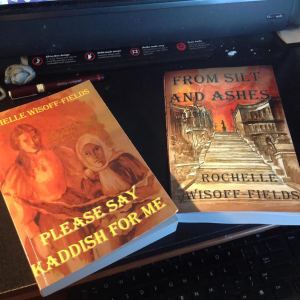
A tweaked excerpt from my first novelPLEASE SAY KADDISH FOR ME.
Word Count: 100
CHARNEL HOUSE
Havah gazed out the window. Snowflakes like milk-white dove wings glimmered past the streetlamp and floated to the sidewalk.
“Have you ever seen anything more beautiful, Arel?”
“We had snow in the old country. It’s all the same.”
She grasped Arel’s hand and held it to her belly. Their unborn child kicked against his palm with such force Havah flinched. Brushing her lips across her husband’s disfigured cheek she fought the stone forming in her throat. One by one, faces of those who had perished before her eyes drifted through her memory.
“No, Arel, nothing will ever be the same.”
***
*Reviews do help sell books. If you’ve read any of the three, would you do this author a favor and leave a review on Amazon or Goodreads or both? Thank you.
Note: You can call me crabby or controlling if you like, but…over the past few weeks some writers are going way over the word limit. No one will be kicked out for doing so, but the challenge is to write a story in 100 words or less. While I don’t take issue with a word or two over, last week one of them went over 200 words.
The next photo is the PROMPT. Remember, all photos are property of the photographer, donated for use in Friday Fictioneers only. They shouldn’t be used for any other purpose without express permission. It is proper etiquette to give the contributor credit.
Think you’ve seen this photo before? You have. It’s been pointed out that I posted this prompt in February. 😯 A repost was unintentional, but is what it is. If you have a story for it you were happy with, feel free to use it. 😉 Thank you Dawn and Suzanne for pointing it out. This is a first. What was I thinking?
Not exactly a flash fiction and not exactly an excerpt. Here’s a scene from AS ONE MUST, ONE CAN.
OLIVE BRANCH
Nikolai Derevenko and his father had hardly spoken in twenty years so Sergei’s sudden appearance in Kansas City for his grandson’s graduation mystified him.
Sergei rotated the crank on the front of the car, starting the motor, and climbed into the driver’s seat. “It’s a Ford. Almost new—Model N, made in 1906,” he shouted over the clatter. “My gift. Tomorrow you learn to drive it.”
Nikolai scowled. “Thanks, but no thanks. God gave us legs and there are streetcars. With all of your frivolous spending you won’t have enough for your fare back to Russia.”
If you’ve made it this far down the page I hope you’ll take the time to watch the short video. Perhaps this is the reason I’ve been impressed of late to write so many Holocaust themed stories. I plan to post my picture on Twitter and Facebook. When push comes to shove there is one race…THE HUMAN RACE #WeRemember
What Pegman Saw is a new Flash Fiction challenge utilizing Google Maps by K Rawson. The assignment is to write a story –150 words or less– based upon the location provided. Use the photo or follow the Google Maps link and take your own street view tour.
I’m stepping out of my Friday Fictioneers comfort zone this week. Having more than 100 words to play with was actually something of a luxury.
Genre: Historical Fiction
Word Count: 149
POSTAGE DUE
“Didja check the return address?” asked Milly.
Charlie, the postmaster, pushed back his cap and scratched his head. “Ain’t got one. Jest addressed to you and James.” He unfolded a rumpled note. “It says, ‘December 20, 1914. Keep it warm and dry. Merry Christmas.’ It’s postmarked Pleasantville, Iowa. You know anyone there?”
“We went through there last January.” The vision of a young couple popped into her mind. “Grace and Elliott Tucker. She couldn’t’a been more’n fifteen. They put us up for a few days when one of our horses went lame. Nice folks. I hope they’re well.”
“Afraid Mr. Tucker done got his-self killed. Struck by lightning.” Charlie handed her an obituary included with the note. “You gonna accept the package?”
Milly lifted the month old infant from the mailing pouch, breathed in his sweetness and kissed his round cheek. “In time for Christmas dinner. Welcome home, Noel.”
The next photo is the PROMPT. Remember, all photos are property of the photographer, donated for use in Friday Fictioneers only. They shouldn’t be used for any other purpose without express permission. It is proper etiquette to give the contributor credit.
Today I hold my firstborn, Lois Marie. Marie is for my mother of blessed memory who perished before I turned nine.
Remember how she shoved me into your tender arms at Camp de Rivesaltes? Remember how you kissed away my tears? Why did you leave your comfortable home to spit in the face of death?
“It is my purpose,” you said.
Although I’ve been criticized for naming my Jewish baby after a living gentile, it’s only right to honor the American angel who combed the lice from my hair.
Je ne t’oublierai jamais, Lois Gunden.
*Note: It is an Ashkenazi Jewish tradition to name a child after someone, usually a family member, who has passed on. To a certain extent it’s believed that the soul of the loved one lives on in the child who bears his or her name.
.
.
Lois is one of the “righteous gentiles” honored at Yad VaShem, the Holocaust museum in Jerusalem.
“I was your age when a doctor came to visit Svechka—Dr. Rosenthal—all the way from New York, America,” she tells Havah. “He claimed it was his mission to recruit Jews to become doctors so we wouldn’t always be at the mercy of the Goyim. He stayed for two years and filled my head full of knowledge and dreams…”
Recognizing Fruma Ya’el’s aptitude for medicine, Charles urged her to return to New York with him to study medicine and marry him. When tragedy struck she laid her aspirations to rest. Obeying her father’s wishes, she married Herschel. Dejected and heartbroken, Charles left Svechka.
Setting down the tattered diaper she used as a polishing cloth, Fruma Ya’el reached into a concealed pocket in the wooden box’s lining and pulled out an old tintype. Lean, with black hair, bushy moustache and olive skin, to this day, Charles’ image held the power to quench her arid heart’s thirst if only for the briefest moment. The memory of his lips pressed hard against hers still lingered in her mind like sweet cream and honey.
“Charles. I can’t.”
“You’d rather rot in ignorance because of a narrow minded old man and a piece of paper than come with me?”
“I’m all my father has left.”
Charles’ dark eyes filled. He grasped her face with both hands. “I beg of you, Ya’el. Think. There are schools cropping up all over America for women. You’ll be a brilliant doctor, a medical pioneer.”
The next photo is the PROMPT. Remember, all photos are property of the photographer, donated for use in Friday Fictioneers only. They shouldn’t be used for any other purpose without express permission. It is proper etiquette to give the contributor credit.
It’s not exactly an excerpt but a snippet tweaked to be a teaser to my book From Silt and Ashes.
Genre: Historical Fiction
Word Count: 100
PRELUDE TO AN ODYSSEY
After weeks of contemplation and numerous entreaties from Dr. Trubachov in Ukraine, Dr. Nikolai Derevenko tendered his resignation to St. Thomas Hospital. As he left the administrator’s office he felt one of his burdens had lifted.
“Good morning, Doctor.”
An attractive nurse whose dimensions stretched her starched uniform to its limits cocked her head and flashed a dimpled smile. He followed her with his eyes to the other end of the corridor until she turned and entered a patient’s room.
When he returned to his original path he looked up in time to avoid a collision with a police officer.
.
.
.
If you’ve read it and enjoyed please leave a review on Amazon.com. Thank you.
The next photo is the PROMPT. Remember, all photos are property of the photographer, donated for use in Friday Fictioneers only. They shouldn’t be used for any other purpose without express permission.
I’m not sure at this stage of the game when my next novel As One Must, One Can will be released. However this prompt is perfect for the following excerpt. The operative is excerpt and, admittedly, it is not a complete story. It is set in Kansas City, Missouri in the year 1908 where Arel Gitterman makes his living as a tailor.
Genre: Historical Fiction
Word Count: 99
EXCERPT FROM AS ONE MUST, ONE CAN
Two electric fans only circulated hot air, thick with machine oil and chalk dust, in the tailor shop. Arel’s rigid collar irritated his neck and he pushed his wet hair from his forehead. His sewing machine hummed and afternoon light glinted off the bobbing needle as he guided a shirtsleeve under the presser foot. A drop of sweat rolled down his cheek and dripped onto the cuff.
Whipping the linen shirt off the table, he hurried to wash it before the stain could set in. A wave of nausea swept over him and a sharp pain seared his chest.
.
.
.
Thank you to our own GAH Learner for such a lovely review blog of PLEASE SAY KADDISH FOR ME. (Click title to read.)
My journey continues, putting one foot in front of the other. When I began to write PLEASE SAY KADDISH FOR ME I knew I had a story to tell. I pitched it as “The Dark Side of Fiddler on the Roof.” I wrote, rewrote and edited Havah Cohen Gitterman’s story, thinking I would stop with this one book. However, the voices in my head compelled me to continue the saga with FROM SILT AND ASHES.
At a point where I thought I’d completed the first two books I began to write AS ONE MUST, ONE CAN. However, I had to stop to go back to the first book..and the second book. For five years the third book languished in an unopened Word doc. file. When I returned to my 60,000 word, unfinished manuscript, I found that my characters had grown, changed and gone in different directions than I’d originally anticipated. Not to mention that, after ten years I had also grown and changed as a writer. Perhaps 20,000 of those original 60,000 words survived the overhaul.
My agent, Jeanie Loiacono and W& B Publishing turned up the heat this summer by giving me a July deadline with the promise of a contract. Setting aside all writing time to devote to Havah, I sent Friday Fictioneers into reruns.
COMING SOON!
My story has a happy “ending.” The manuscript has been submitted and approved. Contracts with both agent and publisher are signed. Artwork for the inside of the book is complete and I await the proof copy to make any last minute edits.
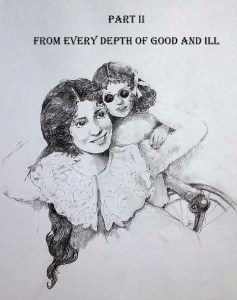
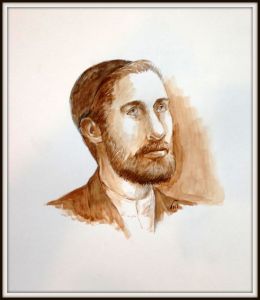
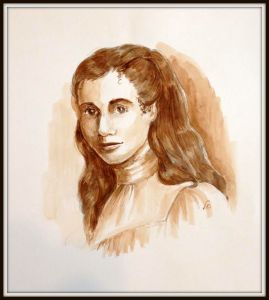
Below are the divider pages for AS ONE MUST, ONE CAN to whet your appetite.
“More pogroms. And so close.” Rabbi Yussel Gitterman’s sightless eyes filled with tears.
Eighteen-year-old Arel Gitterman pulled his coat around his ears and shivered, partly from cold and partly with rage. What had they done to make the Christians hate them so much? “We should retaliate. We should gather all of the young men—”
“Shah! Such nonsense!”
“Ouch! Papa, is it unreasonable for men to protect their homes?”
“Remember, my son. A soft answer turns away wrath.”
“How can you say that, Papa? Last night innocent people were murdered in their beds all over the countryside. Did they have time to make an answer—of any kind?”
Hershel Levine’s green eyes flashed. “The lad makes sense, Yussel. There is much cruelty in the world. Sometimes one has to wonder what the Almighty is thinking.”
“So, Hershel, my old friend, do you think the three of us, an old cantor, a blind rabbi and a boy who’s barely able to squeeze out a whisker are going to seek revenge on those animals with their guns and Czar Nicolas, may his name be blotted out?”
Arel gritted his teeth. “Reb Pinkas said he heard the Christians burned down a synagogue. A rabbi died trying to protect the sacred scrolls. Papa, it could just as easily have been you.”
“Reb Pinkas is up early bearing his tales. Yes, it could have been any Jew in this land, my Son.” Yussel patted his shoulder. “It’s dangerous to be a Jew in this Pale of Settlement. But now let’s tend to matters at hand. It’s Shabbes, the Sabbath, and we have a synagogue to prepare for morning services.”
“Yes, Papa.” Arel knew from experience arguing with his father would not accomplish anything. Still his anger boiled because they were Jews who lived in poverty under the tyranny of the Russians. Prisoners in their own country, unable own land and denied education beyond their Hebrew schools.
For the next few moments Yussel’s cane tapping along the frozen ground was the only sound. Each man lost in his own thoughts, they approached the synagogue, the largest building in the Jewish quarter of Svechka.
To call a backward village “The Candle” was a contradiction. Arel supposed at some point in time the Russians considered it a place of enlightenment.
~~Taken from Please Say Kaddish for Me by Rochelle Wisoff-Fields
To the best of my knowledge, the shtetl or village known in Please Say Kaddish for Me as Svechka only exists in the author’s imagination. Like Anatevka in Fiddler on the Roof it represents the many villages scattered throughout Eastern Europe during the 19th and early 20th centuries.
Shtetl is Yiddish for “little town.” These villages ranged in size from several hundred residents to several thousand. The Jews usually lived within the town while the Gentiles tended to live on the outskirts. Central to the Jewish community was the Synagogue and Kahal, the community council. Most of the shtetl Jews were artisans and shop owners while the scholars were the revered minority. Both Arel and Havah, the children of rabbis, have grown up in their respective shtetls, Natalya and Svechka, as members of the elite part of their societies.
Enjoy a little taste of what their world was like.
Note: If you’ve read and enjoyed either or both of my books, please leave a review on Amazon.com and any of the other sites. I ask for Amazon primarily because of the scope of influence. Thank you.
With his elbow on the counter, he [Arel] rested his chin on his hand which he used to cover his left cheek. He waved his other hand over an official looking sheet of paper in front of him.
“What’s that?” Havah asked.
“It’s an indictment from His Honor Judge Wallace. I could go to prison.”
“What crime did you commit?”
“I’ve opened my shop on Sunday instead of Saturday.”
“And this is a crime?”
“According to him and his Sunday labor law, we’re required to observe the Christian Sabbath or pay a penalty. We may open our shops but if we sell anything we are in violation.”
“I don’t understand this man. Ulrich and Dr. Florin call themselves Christians and even go to church on Sunday. They are kind and gentle—nothing like that judge.”
A lump formed in the pit of Havah’s stomach. “Arel, you don’t suppose…” She envisioned the police smashing the window. They beat Arel with their clubs while he pled for mercy. Next they came after Rachel.
Havah shook off her grisly daydream and remembered her chance meeting with President Roosevelt at Ellis Island. Imagine—the ruler of the United States taking the time so speak with a Jewish peasant girl from Moldavia. Such a man would never allow another Kishinev or Odessa to happen in his great country.
She took the indictment in her hand and crumpled it in her fist. “Every ass likes to hear himself bray.”
In this last book of the trilogy, Havah finds a formidable nemesis in Judge William H. Wallace who was described by the Kansas City newspapers as a crusader for the Sunday Blue Law. During his tenure as criminal court judge, he handed out over a reported 7,000 indictments. At odd times his deputies arrested cigar dealers, druggists and even music conductors in the midst of performances if they fell on Sunday. No one was exempt.
One article quotes him as referring to the Jews as evil for their observance of Sunday on Saturday. It was only natural for Havah to fear a pogrom in her new country. She had experienced Antisemitism at its worst and recognized the signs.
***
This article, as written below, appeared in The Kansas City Journal, October 3, 1908
NOW HE TARGETS THE JEWS.
Judge Wallace Says Jews Must Keep
Their Stores Closed on Sunday.
Not only is Judge Wallace going after the theater managers, pool hall proprietors, barber and tobacco dealers, but from now on his righteous wrath is to be visited upon the wicked citizens of Jewish extraction who keep their second hand clothing stores open on Sunday. According to his special prosecutor it makes no difference to Judge Wallace that the religious belief of these dealers does cause them to observe Saturday as the Sabbath and that their places of business are tightly closed that day — they will be prosecuted just as vigorously if they open on Sunday. When the Wallace Sunday closing crusade was started a statement was authorized by the court to the effect that provided the Jews of the city observed Saturday as Sunday they would be exempt from prosecution, but it is now stated that there has been a misconception as to this statement. Why the misconception has not been corrected before does not yet appear. “Under the law,” said the court’s spokesman, “if the Jews observe Saturday as Sunday they are exempt from prosecution so far as labor is concerned, that is, they may work on Sunday; but this exemption does not allow them to sell goods and they are to be prosecuted if they do. Already two indictments for this offense have been found by the grand jury and the offenders will appear in court the first of next week.” Therefore, if the Jew merchants of the city are so disposed, they may keep their stores open on Sunday, but if they sell anything the heavy hand of the law will be laid upon them. The explanation of the law as interpreted by Judge Wallace in this matter does not include a clear view of the fine distinction between what is called “work” and selling second-hand clothes. That this new interpretation of the law will work a distinct hardship on the Jew dealer whose religious scruples will not allow him to do business on Saturday goes without saying for it effectually shuts him off from selling his goods on two days out of seven. “I think the Sunday law will be pretty generally observed tomorrow,” said the special prosecutor. “In fact, I think 98 per cent of the places which have heretofore been in the habit of doing business on Sunday will be found closed. The grand jury will proceed with its work Monday morning, at which time the rest of the theater managers whom we did not have time to arraign this week will be brought into court.
Note: If you’ve read and enjoyed either or both of my books, please leave a review on Amazon.com and any of the other sites. I ask for Amazon primarily because of the scope of influence. Thank you.